
Within our yoga practice we have 7 chakcras that can influence in our physical, mental, and spiritual side. \
The first one is our Root chakra, this is located at the base of the spine and for our physical poses it is the foundation of the hands and feet. Often times the root chakra is our center of who we are, what makes us who we are our actual roots. When our root chakra is off balance, we question ourselves of our identity and security.
1. Root Chakra (Muladhara)
Color: Red | Location: Base of the Spine | Grounding, Stability, and Security
Our Root Chakra represents our foundation.
Think about the importance of a strong foundation in your yoga practice. Whether we are standing in Mountain Pose, holding Warrior II, or finding stability through our hands in Downward-Facing Dog, our connection to the ground provides support for everything that follows.
The same concept can be applied to our everyday lives.
Our roots represent where we come from, our values, our experiences, and the things that make us who we are. They help establish our sense of identity, belonging, and security.
In traditional chakra teachings, an imbalanced Root Chakra is associated with feelings of insecurity, uncertainty, fear, or disconnection.
Have you ever experienced a period in your life when you began questioning who you were, where you belonged, or what direction you were heading?
These moments can encourage us to reconnect with our foundation.
Ways to explore your Root Chakra:
- Practice grounding poses such as Mountain Pose, Child’s Pose, and Warrior II.
- Spend time outdoors connecting with nature.
- Establish routines that provide consistency and stability.
- Reflect on the values and experiences that have shaped who you are.
Reflection: What helps me feel grounded, secure, and connected to myself?

Next is our Sacral chakra. This is our center or creativity and sexuality. This makes sense because this is where our sex organs are located and with the creation of life is also our ability to think and be creative to problem solving or doing things in our own way. When this is out of balance, we have issues with our connection to our sensuality and ability to think creatively. An example of this is if you ever had a writer’s block? Or unsure of the next step to something you are in charge of for work or creating?
2. Sacral Chakra (Svadhisthana)
Color: Orange | Location: Lower Abdomen | Creativity, Pleasure, and Emotional Expression
Our Sacral Chakra is traditionally associated with creativity, sensuality, pleasure, and our ability to experience and express emotions.
Located in the lower abdomen, this chakra is symbolically connected to reproductive energy and the creation of life. However, creation extends far beyond reproduction.
We create through our thoughts, our ideas, our relationships, and the ways we approach challenges.
Have you ever experienced writer’s block? Perhaps you were working on a project, developing a new idea, or trying to solve a problem but couldn’t determine your next step.
These experiences can be opportunities to explore the themes of creativity and emotional expression associated with the Sacral Chakra.
Sometimes, when we become overwhelmed by responsibilities or expectations, we lose touch with the activities that bring us joy.
Our Sacral Chakra reminds us of the importance of allowing ourselves to create, experience pleasure, and embrace the natural changes that occur throughout life.
Ways to explore your Sacral Chakra:
- Practice gentle hip-opening movements and flowing yoga sequences.
- Explore creative activities such as writing, painting, music, or dancing.
- Make time for hobbies that bring you happiness.
- Allow yourself to experience emotions without immediately judging them.
Reflection: Am I allowing myself the freedom to create, experience joy, and express my emotions?
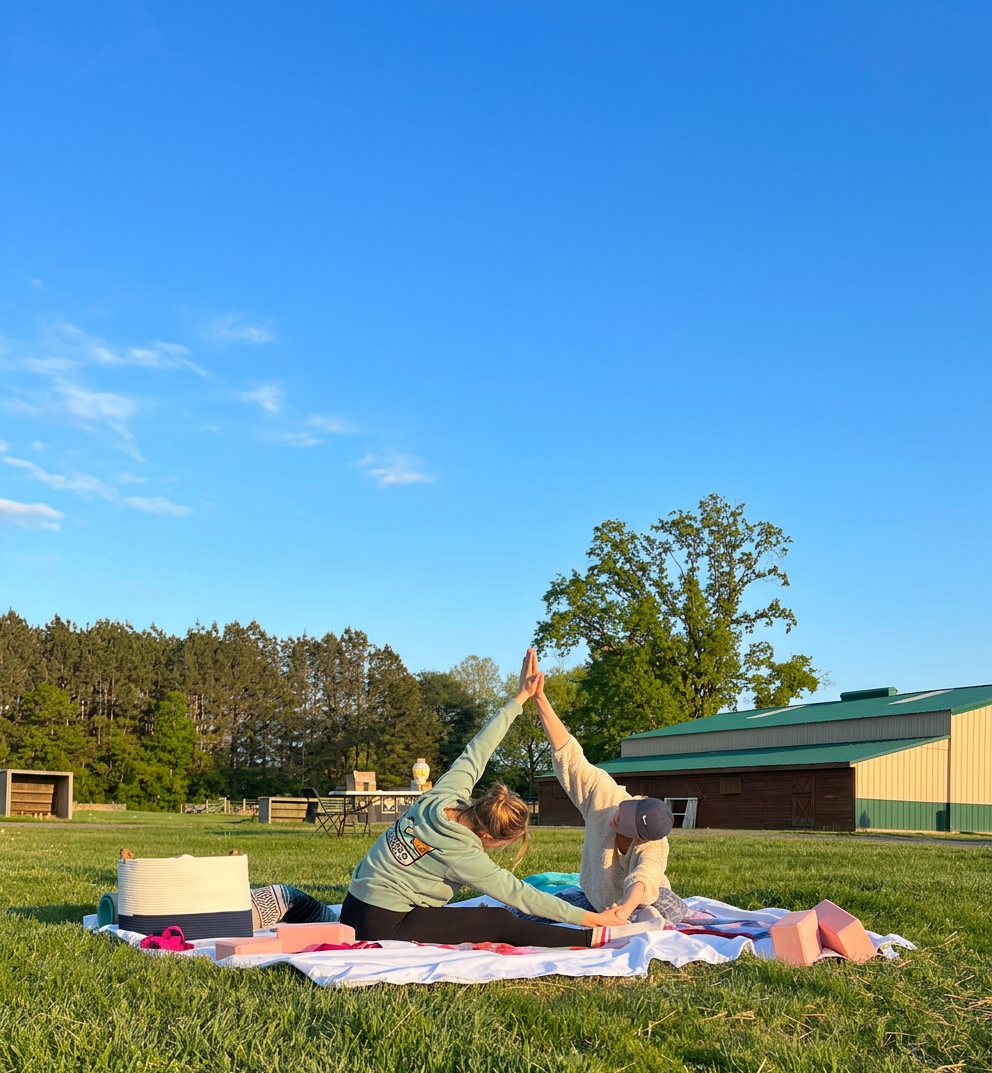
Next up is our Solar Plexus chakra. This is located at our gut and is part of our gut instinct. This also makes sense in our physiological biome of our gut bacteria can lead back to even what foods were fed in the mother’s womb and how it influences our own dietary patterns are we develop and age.
3. Solar Plexus Chakra (Manipura)
Color: Yellow | Location: Upper Abdomen | Confidence, Personal Power, and Self-Trust
Have you ever had a gut feeling about something?
Our Solar Plexus Chakra is traditionally associated with personal power, confidence, self-esteem, and the ability to trust ourselves.
Located in the upper abdomen, this chakra symbolically represents our inner strength and determination.
Interestingly, modern research has also demonstrated a relationship between the digestive system and the brain through what is known as the gut-brain axis.
Our digestive system communicates with our nervous system, and the gut microbiome can influence aspects of health and well-being. However, this biological relationship is separate from the traditional chakra system.
I find this connection particularly interesting because nutrition, stress management, and movement are all important components of our overall wellness.
When we feel uncertain about our decisions or struggle with self-confidence, the Solar Plexus Chakra offers a symbolic reminder to reconnect with our sense of personal power.
It encourages us to recognize that while we cannot control everything happening around us, we can influence our choices, actions, and responses.
Ways to explore your Solar Plexus Chakra:
- Practice core-strengthening yoga poses such as Boat Pose and Plank.
- Set small, achievable goals that build confidence.
- Practice making decisions based on your values.
- Recognize personal accomplishments, even the small ones.
Reflection: Where in my life can I begin trusting myself more?
Our center is our Heart Chakra! Our ability for love and compassion for ourselves and others. Our heart chakra can be troubled for when we are hard on ourselves or are dealing with a difficult relationship with loved ones. That is why it is so important to refocus on our breath and clear the mind with our meditation. Sometimes we learn of who to hold onto and who to let go.
4. Heart Chakra (Anahata)
Color: Green | Location: Center of the Chest | Love, Compassion, and Connection
At the center of the seven-chakra system is our Heart Chakra.
This chakra represents our capacity to experience love, compassion, forgiveness, and connection with ourselves and others.
Our relationships are an important part of our lives. They can provide encouragement, comfort, belonging, and opportunities for personal growth.
However, relationships can also challenge us.
Sometimes we experience disappointment, grief, misunderstandings, or difficult changes in the connections we have with others.
We may even find ourselves being harder on ourselves than we would ever be toward someone we love.
Within traditional chakra teachings, these experiences may be explored through the themes of the Heart Chakra.
One of the most meaningful lessons we can practice is learning that compassion does not always mean holding on.
Sometimes love involves forgiveness. Sometimes it involves setting boundaries. And sometimes personal growth means recognizing when we need to let go.
Through yoga, meditation, and intentional breathing, we can create moments to observe our emotions rather than immediately react to them.
Ways to explore your Heart Chakra:
- Practice gentle chest-opening poses such as Cobra, Bridge, and Supported Fish.
- Incorporate loving-kindness meditation.
- Practice gratitude for meaningful relationships.
- Extend the same patience and compassion to yourself that you offer others.
Reflection: Am I giving myself the same love, understanding, and compassion that I give to others?
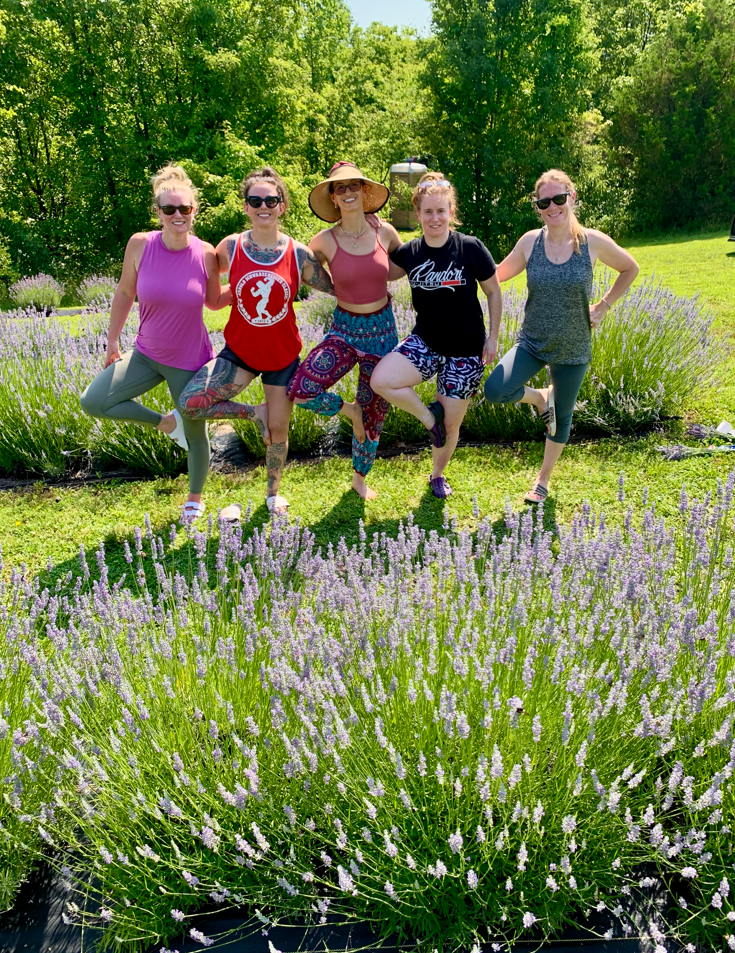
Next is our Throat chakra, with will connect majorly with our other chakras! With our Throat chakra it is all about our ability to express what is true. whether we are expressing our truth of who we are, what we think, The power of our Throat chakra is WHEN to speak up and when to be silent. There is power in both sides. When we are imbalanced with our Throat chakra we can range from being quiet to talkative to having a shaky voice, or get choked up. This reflects out emotions and our comfortability in our way to express what is true.
5. Throat Chakra (Vishuddha)
Color: Blue | Location: Throat | Communication, Authenticity, and Truth
Our Throat Chakra is traditionally associated with communication, self-expression, and the ability to speak our truth.
I believe this is one of the most interesting chakras to reflect on because communication influences nearly every aspect of our lives.
Our relationships, careers, friendships, and even our relationship with ourselves depend on how we communicate.
But communication is not simply about speaking.
It is also about listening.
There is power in knowing when to speak up, and there is power in knowing when to remain silent.
Have you ever wanted to express something important but found yourself getting emotional, struggling to find the right words, or feeling your voice begin to shake?
Our emotions can influence the way we communicate, particularly during difficult conversations.
The Throat Chakra invites us to reflect on whether we are expressing ourselves authentically, listening with intention, and communicating in ways that align with our values.
It also reminds us that we do not have to respond to everything immediately.
Sometimes giving ourselves time to process our emotions allows us to communicate with greater clarity and compassion.
Ways to explore your Throat Chakra:
- Practice mindful breathing and gentle neck and shoulder stretches.
- Journal about thoughts or feelings that are difficult to express.
- Practice active listening during conversations.
- Communicate boundaries calmly and clearly.
Reflection: Am I expressing my truth in a way that honors both myself and others?
Coming up to our Third Eye chakra, our intellect, our memories, our thinking. We are all unique when it comes to our Third eye chakra.
6. Third Eye Chakra (Ajna)
Color: Indigo | Location: Between the Eyebrows | Intuition, Awareness, and Wisdom
Our Third Eye Chakra is traditionally associated with intuition, perception, wisdom, and inner awareness.
We all experience life differently.
Our memories, personal experiences, education, and beliefs influence how we interpret the world around us.
Sometimes our thoughts help us recognize patterns and make informed decisions. Other times, our fears, assumptions, or previous experiences can influence how we perceive a situation.
This is where self-awareness becomes especially important.
Have you ever looked back on a situation and realized that your understanding changed after gaining more information or allowing yourself time to reflect?
The Third Eye Chakra encourages us to explore the difference between what we know, what we believe, and what we may simply be assuming.
Developing awareness does not mean that we will always have the answers.
Instead, it means becoming more willing to observe our thoughts, question our assumptions, and remain open to learning.
In our yoga practice, meditation offers an opportunity to quiet external distractions and become more aware of our internal experiences.
Ways to explore your Third Eye Chakra:
- Practice meditation and mindfulness.
- Spend time reflecting before making important decisions.
- Journal to identify recurring thought patterns.
- Remain curious and open to different perspectives.
Reflection: Am I seeing a situation clearly, or am I allowing fear and assumptions to influence my perspective?
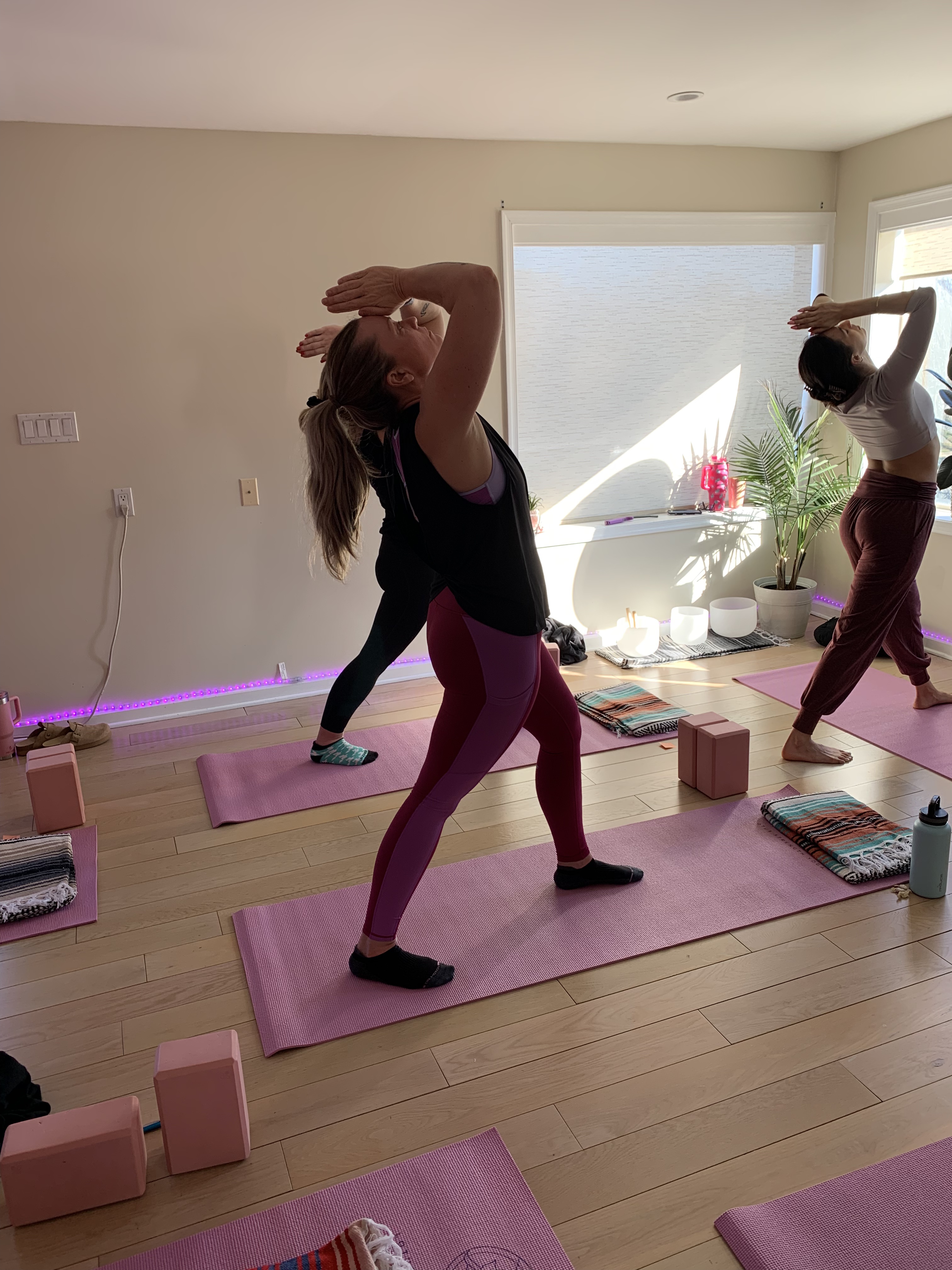
Lastly is our Crown chakra. This is our connection to the universe and the Devine. For you this maybe your connection to God and all he has created for us. When it comes down to everyday life, it is seeing the bigger picture, and realizing what really matters. Realizing we are all human, we all make mistakes, and even if we believe differently from one another, we can still choose to show kindness and mercy to others.
7. Crown Chakra (Sahasrara)
Color: Violet or White | Location: Crown of the Head | Spiritual Connection, Purpose, and Higher Awareness
Our final chakra is the Crown Chakra.
Traditionally, this chakra represents spiritual awareness, connection, and the understanding that we are part of something greater than ourselves.
For some individuals, this may represent a connection to God and all that He has created. For others, it may represent a connection to nature, the universe, humanity, or their own spiritual beliefs.
Regardless of our individual beliefs, the Crown Chakra invites us to consider the bigger picture.
What truly matters in our lives?
How do our actions influence the people around us?
What kind of person are we becoming?
Throughout life, we will experience challenges, disappointments, accomplishments, and unexpected changes.
We will make mistakes, and so will the people around us.
One of the most meaningful lessons we can embrace is that we do not have to share the same beliefs or experiences to show one another kindness, understanding, and mercy.
Sometimes personal growth involves recognizing that not everything is within our control.
However, we can continue choosing how we respond, how we treat others, and how we move forward.
Ways to explore your Crown Chakra:
- Practice quiet meditation or prayer.
- Spend time in nature.
- Reflect on your values and life’s purpose.
- Practice gratitude, compassion, and acceptance.
Reflection: Am I living in a way that reflects what truly matters to me?
Bringing the Seven Chakras Into Your Yoga Practice
When we explore the seven chakras together, we begin to recognize how their traditional meanings connect to different aspects of our human experience.
Our need for stability. Our desire to create. Our ability to trust ourselves. Our capacity to love. Our courage to communicate. Our willingness to learn. And our search for greater meaning.
These qualities are not separate from our everyday lives.
They are part of the ongoing practice of becoming.
At Lotus Strength Yoga, we believe yoga extends beyond physical movement. Our practice incorporates strength, mobility, breathwork, meditation, and opportunities for personal reflection.
During our classes and special wellness events, we often create space for a relaxing sound bath experience.
Sound baths use instruments such as singing bowls to create tones and vibrations that participants can listen to while resting comfortably.
Some individuals describe experiencing colors, imagery, emotions, or personal reflections during these sessions. These experiences are subjective and may hold different meanings for each person.
Although sound baths cannot scientifically identify chakra imbalances, they can provide an opportunity for relaxation, mindfulness, and reflection.
There is no right or wrong experience.
You may notice a particular emotion, find yourself reflecting on something important, or simply enjoy a few peaceful moments away from the responsibilities of everyday life.
The Practice of Becoming
Our wellness journey is not about reaching a point where everything is perfectly balanced.
It is about continuing to learn, grow, and develop a deeper understanding of ourselves.
Some days we feel grounded and confident. Other days we question our direction, struggle with our emotions, or find ourselves navigating difficult changes.
That is part of being human.
Through the practice of yoga, we can create opportunities to reconnect with ourselves, strengthen our bodies, quiet our minds, and reflect on the things that matter most.
We are not meant to have everything figured out. We are meant to continue learning through the practice of becoming.
Whether you are new to yoga or have been practicing for years, we welcome you to join us at Lotus Strength Yoga for an opportunity to move, breathe, reflect, and reconnect.
Explore our classes, private sessions, and upcoming wellness events at lotusstrength.yoga.
With strength, compassion, and intention,
Megan Breza Patchell
Lotus Strength Yoga

